





Type 2 Diabetes
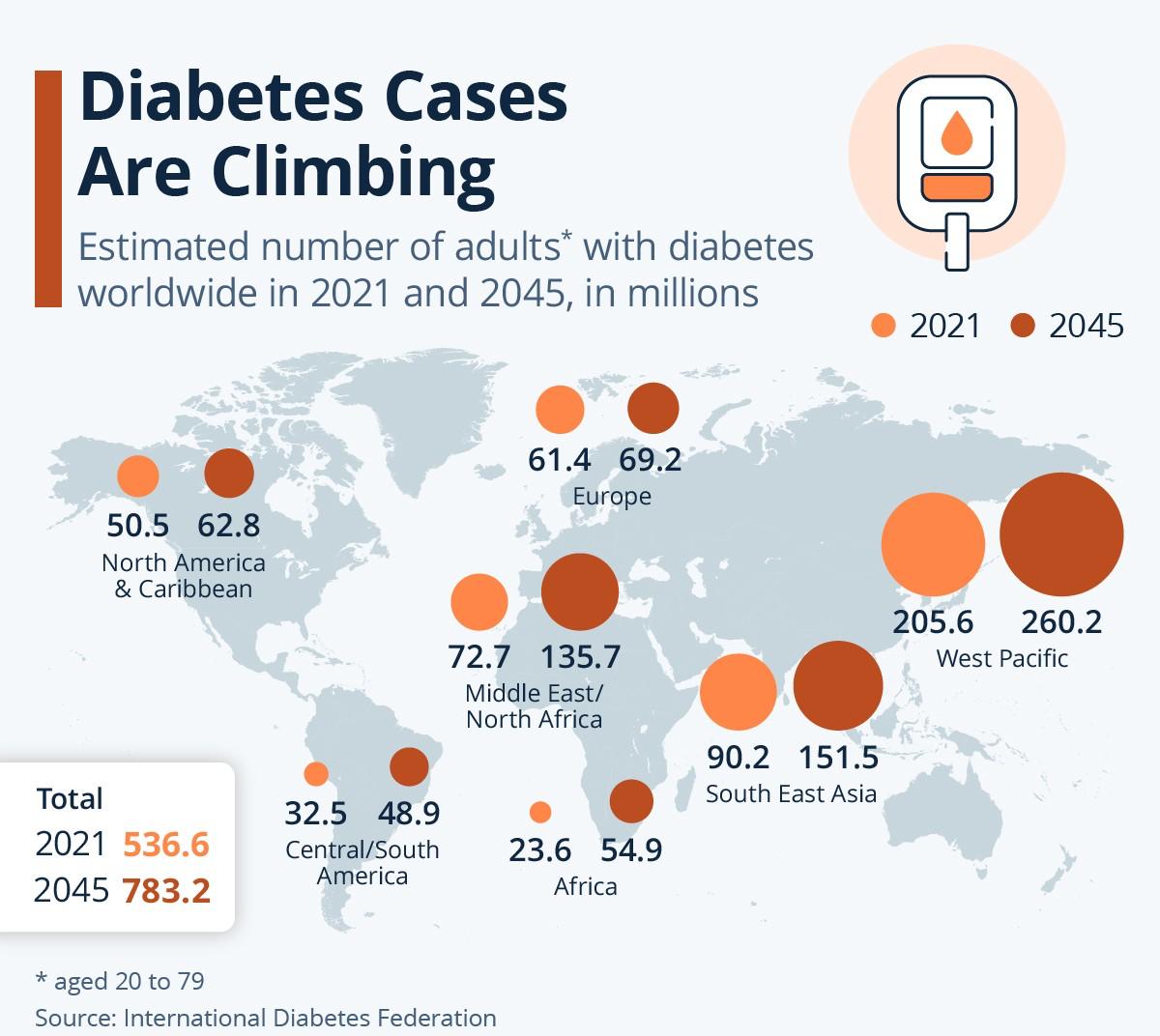
Diabetes Cases Are Climbing
According to the International Diabetes Federation, 537 million people between the ages of 20 and 79 suffered from diabetes worldwide in 2021. This represents 10.5 percent of the world population in this age group. The total number of adults with the disease is projected to increase to 787 million (12.2 percent of the global population) by 2045.
The regions with the highest estimated numbers of adults suffering from the disease are the West Pacific and South East Asia. The African continent is expected to see the largest increase in the number of people living with the disease, with the International Diabetes Federation predicting a more than 130 percent increase in cases by 2045.
In Europe, just over 61 million adults were estimated to have diabetes in 2021, a figure that is expected to reach 69.2 million by 2045. The International Federation highlights that globally, diabetes is now among the top ten causes of death, and represents a serious and growing challenge to public health.
Obesity
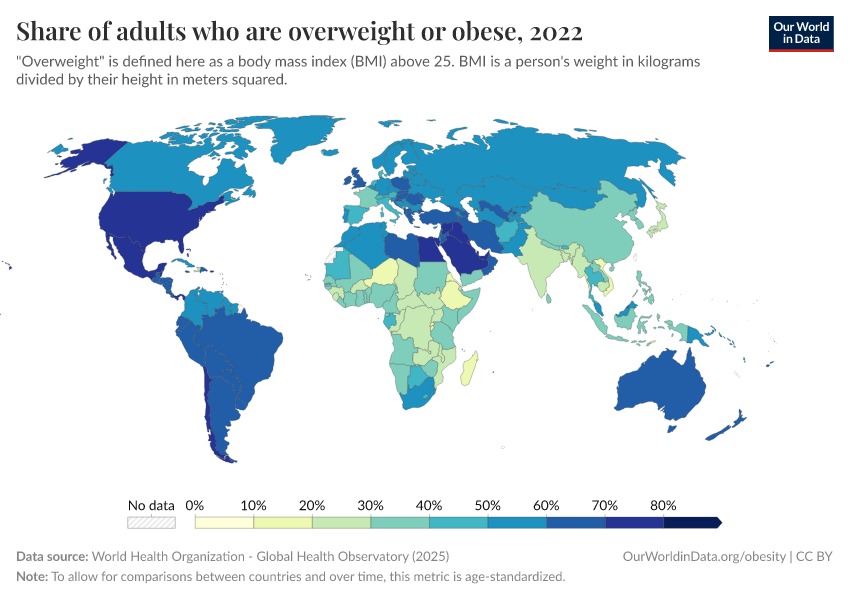
- OECD data reveals alarming global obesity rates, with over half of adults in many countries overweight or obese.
- Obesity prevalence is particularly high in the United States, Chile, and the United Kingdom.
- Korea boasts the lowest obesity rate among the countries studied, with only 4.3 percent falling into this category.
- Men are consistently more likely to be overweight or obese across all countries studied.
- The World Health Organization defines a BMI over 25 as overweight and over 30 as obese.
- Obesity is linked to serious health issues such as type 2 diabetes, cardiovascular diseases, and cancers.
- Misconceptions persist around obesity, often attributing it solely to poor lifestyle choices.
- Genetic predisposition and environmental factors also play significant roles in obesity rates.
- Tackling obesity requires a multifaceted approach including education, policy reform, and societal change.